Warning What does this mean?
Your system is down or running degraded, but this is not an immediate safety danger. Work through the safe steps below.
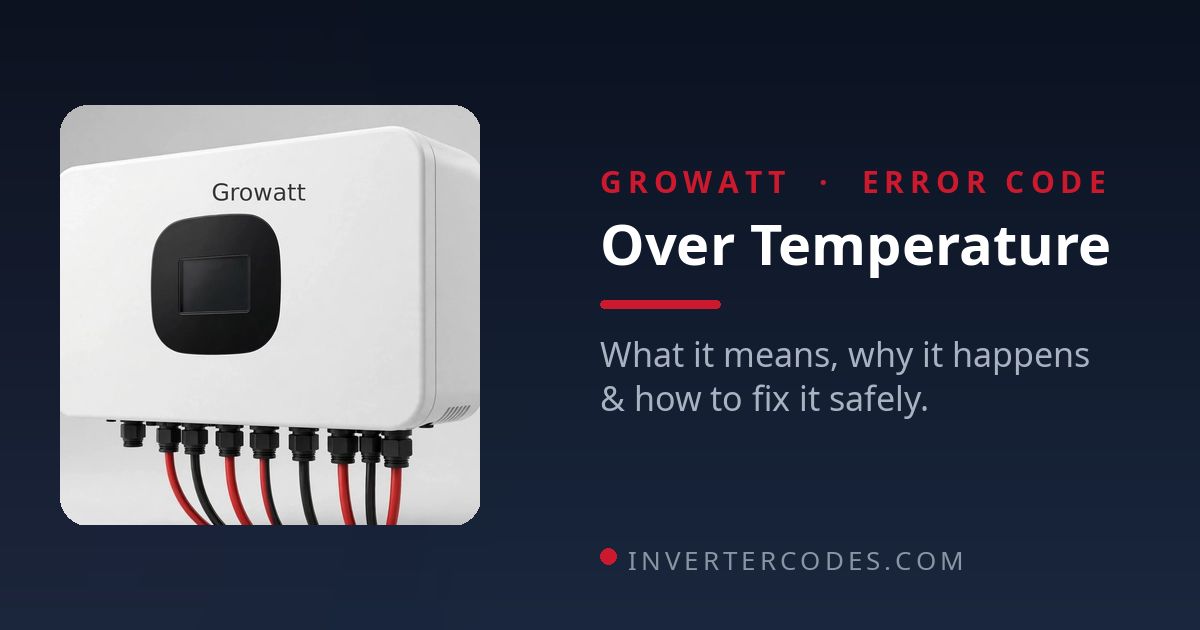
Growatt Inverter Over Temperature — Keep It Cool and Running
Over Temperature (Error 408 on Growatt MIN/TL-X inverters) means the inverter shut itself down because it got too hot, and Growatt's documented fix is to let it cool and restart it once — if the error persists after a restart, contact Growatt or your installer. Check that nothing is blocking airflow around the unit, and never touch the hot enclosure.
What should I do first?
Two quick questions — we'll point you to the right starting point.
Is this code still showing on your inverter's display?
Is your system producing power right now?
What this code means
On Growatt's MIN and TL-X series on-grid inverters, "Over Temperature" (shown as Error 408) is a protective shutdown: the inverter's internal temperature has climbed too high to keep converting power safely, so it stops feeding energy until things cool down. It is not a diagnosis of a broken part — it is the inverter protecting its power electronics from heat damage.
Growatt's fault table is brief and honest: "If the ambient temperature of inverter is lower than 60°C, restart inverter, if error message still exists, contact Growatt." Two things matter. First, this fault is about temperature around and inside the unit, not your panels or the grid. Second, the homeowner's only corrective action is a restart once things have cooled — everything beyond that is installer or service-center territory.
Some heat is completely normal. An inverter working hard at midday converts thousands of watts, and the enclosure will feel hot — the manual carries a burn warning: wait 20 minutes for the housing to cool before handling it. As internal temperature climbs, the inverter first protects itself gently: it derates, trimming power output. What derating feels like is slightly lower output on scorching afternoons with full recovery in the evening. An occasional trip during an extreme heatwave, with full recovery, is the benign end of the spectrum.
The fault turns serious when the pattern changes: trips on mild days, shutdowns that return right after a cool restart, or output that never recovers. Those point away from weather toward blocked ventilation, a poor mounting location, or an internal fault such as a failed temperature sensor — installer jobs, never yours.
What is this downtime costing you?
Rough estimate while your system isn't producing. Adjust the numbers to match your setup.
≈ – kWh of lost production per day.
Estimate only — assumes ~80% real-world output vs. nameplate. Actual losses depend on weather, shading, panel direction, and your tariff.
Common causes
- - Extreme ambient heat — a heatwave, or an inverter in direct afternoon sun or a hot garage or shed, pushing the unit toward the top of its operating range.
- - Blocked airflow — boxes, stored equipment, or overgrown plants crowding the enclosure so heat cannot escape. The most common homeowner-visible contributor.
- - Direct sun baking the enclosure — radiant heating on top of the inverter's own waste heat. The manual's burn warning exists because these housings get seriously hot.
- - Sustained full-power operation at the hottest time of day — maximum output means maximum internal heat, so trips cluster around solar noon.
- - Dust or debris on the heatsink fins — less clean surface to shed heat. Visual check only; never touch the fins or interior.
- - Internal component fault — a failed temperature sensor or degraded internal part, suspected when the fault appears in cool weather or repeats right after a restart. Only your installer or Growatt service can confirm this.
Safe steps to try
Work top to bottom, ticking off each step as you complete it. 0 of 5 done.
Is your inverter still under warranty?
Before paying for a repair, check — your installer may fix this free.
Based on typical standard warranty terms — always confirm with your warranty card or installer paperwork, as terms vary by model, region, and purchase date.
When to call an electrician
Call your installer or Growatt service immediately — and do not restart the unit — if you notice a burning or acrid smell, any smoke, scorch marks or discoloration on the enclosure or the wall behind it, or melted or deformed plastic near the unit. Call the same day if it returns on a mild day, trips again immediately after a cool restart, or shuts down repeatedly while comparable nearby systems keep running. Growatt's manual says that if the error persists after a restart, the next step is to contact Growatt: there is no homeowner adjustment beyond that point, and the sealed enclosure must only be opened by qualified personnel.
Frequently asked questions
Is it normal for my inverter to feel hot?
Yes, up to a point. An inverter converting several kilowatts runs warm, and the housing can get hot enough to trigger the manual's burn warning. Hot is normal; a burning smell, smoke, or discoloration is not — call a professional immediately.
Will the Over Temperature error clear by itself?
No. Growatt documents it as a fault: let the unit cool and restart it once (the manual references ambient below 60°C). If it comes straight back after a cool restart, don't keep resetting — call your installer.
Can I cool the inverter with a hose or a fan?
No. Never spray water on an energized inverter or rig up makeshift cooling. Keep airflow clear and let your installer assess whether the mounting location gets too much sun — relocating an inverter is an electrician's job.
My output dips every hot afternoon but there's no error. Is something wrong?
Probably not — that is derating, the inverter's built-in self-protection, trimming output as it heats and restoring full power as it cools. If the dips are new, deeper, or happening on mild days, have your installer check ventilation and mounting.
Need a professional?
This fault may need professional diagnosis. Contact a qualified solar electrician in your area.
Sources: meaning and troubleshooting verified against the manufacturer's documentation — Growatt MIN 3000–11400TL-XH-US User Manual (English, hosted on en.growatt.com) — Section 11.4 Inverter fault table: “Error: 408 Over Temperature — If the ambient temperature of inverter is lower than 60°C, restart inverter, if error message still exists, contact Growatt.” The same 408/Over Temperature entry appears across the MIN TL-X/XH series manuals. The manual also carries a burn-injury caution: wait 20 minutes for the housing to cool before handling it.